
Documented NY: CDPAP Leadership Has Few Answers for Elected Officials
Amid missed payments and pay disparities, home care agency comes under fire by the New York State Senate.
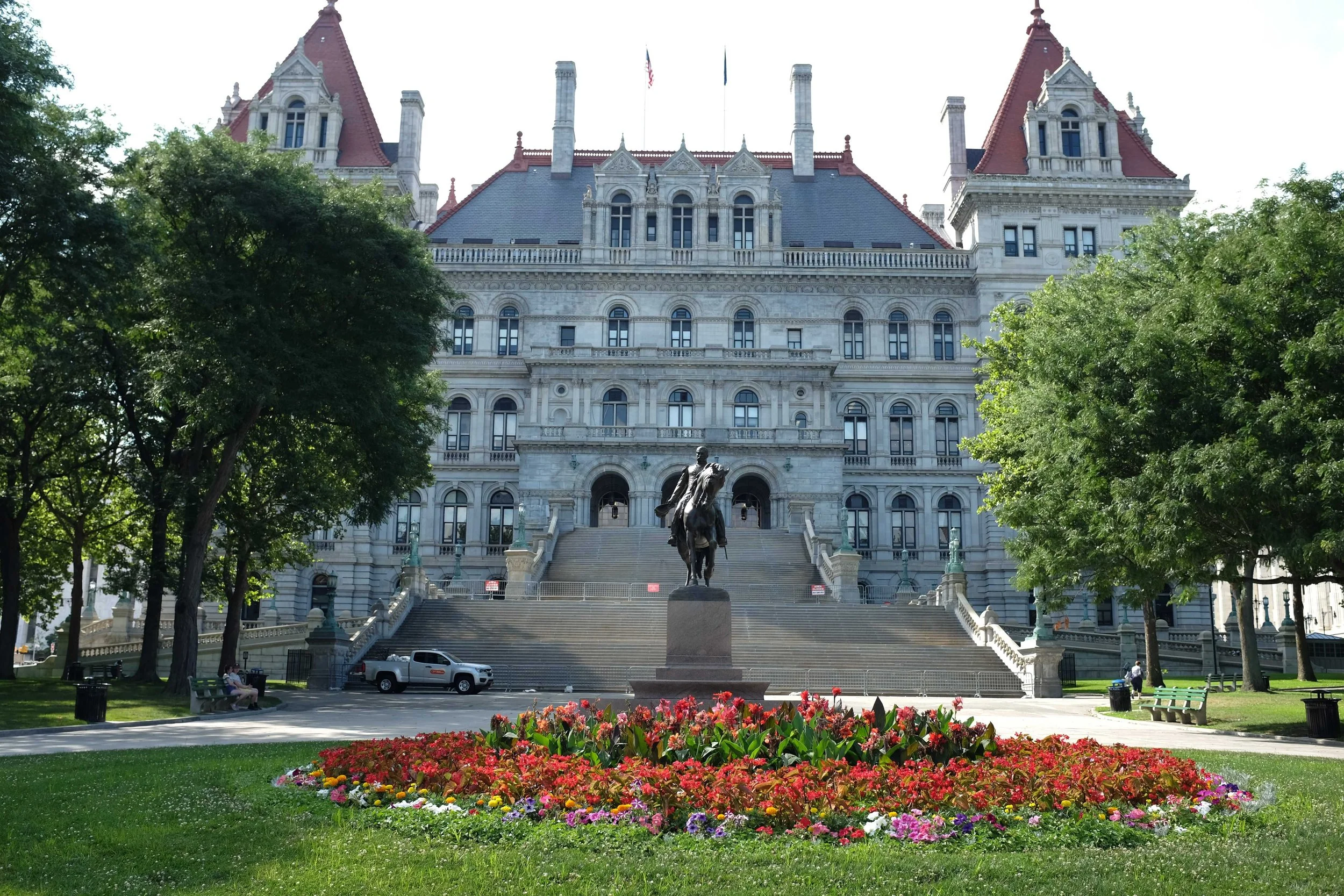
The New York State Capitol building. Mazin Sidahmed for Documented
Read the full article in Documented NY
Aug 26, 2025
Amid ongoing claims of mismanagement and missed payments by CDPAP home care workers, state officials and the program’s new administrators continued to defend themselves and offered little new information about the New York State Medicaid program that allows eligible members to hire their loved ones as their caregivers.
On August 21, at a joint hearing of the Senate Committee on Health and the Senate Standing Committee on Investigations and Government Operations, lawmakers grilled representatives of Public Partnerships LLC, which was selected by Governor Hochul’s administration in January as the single state-wide administrator in the state’s controversial overhaul of the Consumer-Directed Personal Assistance Program (CDPAP).
The senators questioned leaders of the project, including state health officials as well as Public Partnerships LLC (PPL) executives, about claims that workers have experienced widespread payment issues. One immigrant worker that Documented previously interviewed, Amarili Celedonio, claimed that she hadn’t been paid properly for weeks, forcing her to miss payments of her household bills.
Just one day before the hearing, a new survey by Caring Majority Rising, an advocacy group of CDPAP workers and care recipients, showed that problems with PPL management persisted since they began administering CDPAP in April. According to the survey of 235 CDPAP consumers and workers between August 6-19, 55% of workers reported not being paid for all hours worked, with 61% cutting groceries, 40% skipping utilities, and one third missing rent payments. 96% of all respondents reported issues with PPL.
Additionally, the report found a pay disparity between Spanish-speaking and English-speaking workers. Only 18% of Spanish-speaking workers have been paid correctly, compared to 51% of English speakers.
PPL claims that they have paid gross wages of $2.3 billion to 236,000 workers from April to date and insists that all workers who have properly enrolled and submitted compliant timesheets are being paid. They also told Documented that they are doing all they can to ensure language access for workers by providing dedicated call lines for 9 different languages. PPL’s mobile app is also available in 14 languages.
During the hearing, New York State Senator Gustavo Rivera, who chairs the New York State Senate Health Committee, asked New York State Health Commissioner James McDonald about the number of workers who were actually paid during the first week of PPL taking over the program. McDonald stated that he didn’t know.
When pressed by Rivera about how the state evaluated PPL’s performance in handling the CDPAPA transition, McDonald dodged the question.
“With all due respect, you had ample time to prepare for this hearing,” Rivera then responded. “This is a little frustrating to say the least that you can’t answer any of these questions”.
PPL’s CEO, Miki Kapoor, did not attend the hearing; instead, Patty Byrnes, PPL’s Vice President of Government Relations, gave testimony in his place.
When asked by State Senator Patrick Gallivan if all workers have been “paid correctly for all of their hours worked,” Byrnes replied, “To the extent they’ve submitted their timesheets correctly and on time in accordance with CDPAP rules.”
Workers then gave testimony detailing a litany of issues they have faced since PPL took over the program, including missed payments and loss of benefits.
“The governor’s change to PPL has failed me in three ways; they don’t pay holiday hours, which they said they would,” said Belkis Diaz, a Personal Home Assistant from the Bronx, in her testimony. “They don’t pay me in full for my weekly hours, much less pay me overtime. If I was supposed to work five days, they only pay me for four. Why?”
After the hearing, Senator Rivera told Documented that he was not impressed with PPL’s testimony.
“PPL’s testimony was simply unsatisfactory,” he said in a statement. “We gave all invited testifiers ample time to come to this hearing prepared to provide legislators with the answers we have been seeking for months. Instead, PPL’s representative did not have answers for very basic questions or asserted she was not the right person to ask. We will continue to pursue these answers.”
In response to the criticism, Patty Byrnes, PPL’s Vice President of Government Relations, stood by the company’s handling of the transition while affirming the company was striving to improve its communication with both workers and consumers.
“Prior to the transition to a single statewide fiscal intermediary to oversee CDPAP, many fiscal intermediaries were inconsistent with enforcing CDPAP rules,” she said in a statement to Documented. “Now that the transition has come to a close, we are proud of the work we have done to improve CDPAP for its 236,000 personal assistants and the 233,000 consumers they support across New York State. PPL remains committed to making CDPAP more transparent, accountable, and sustainable, without compromising continuity of care.”
The hearing comes as PPL’s management of CDPAP has faced mounting criticism from home care workers, many of whom are immigrants. As Documented previously reported, immigrant home care workers have also complained of widespread instances of wage theft in the program.
On April 25, attorneys with the Legal Aid Society and Katz Banks Kumin LLP filed a class action lawsuit in the Eastern District of New York alleging that PPL failed to pay “thousands of Personal Assistants across New York on time, for all time worked, or at the correct rate, a violation of federal and state wage laws.”
Since PPL has taken over the CDPAP program, the company has also dealt with internal turmoil, with members of its senior leadership team quitting in late June and revelations that a PPL employee who was recently terminated allegedly stole thousands of dollars from 10,000 CDPAP participants meant for its workers. Another investigation by the news outlet New York Focus revealed that PPL and its insurance provider, Leading Edge, engaged in a scheme to pocket nearly $100 million legally owed to home care workers by providing them with bogus health insurance.
With the CDPAP program in constant upheaval, many care recipients have left the program altogether. Data from the New York State Department of Health shows that over 75,000 consumers have left CDPAP and have moved over to agency-based home care known as Personal Care Services (PCS), a separate Medicaid-funded program that employs professional home health care aides, not family members.
“I am one of thousands of parents, caregivers, and consumers who are struggling since the PPL takeover,” Doris Behan, a Personal Assistant in Rochester who cares for her disabled daughter, Sarah, said in a statement.
Reflecting on the hearing, Ilana Berger, Political Director of Caring Majority Rising, believed PPL’s responses were revealing.
“Today’s hearing exposed what we’ve suspected all along, [that] the PPL transition wasn’t about fixing fraud or making CDPAP more efficient, ”she told Documented in a statement. “PPL was hand-picked in a rigged backroom deal that had nothing to do with the well-being of New Yorkers. We now have a private equity company running CDPAP that can’t perform basic functions like paying workers.”