
AMNY: Federal judge finalizes $162 million lost wages settlement for New York home aides downstate
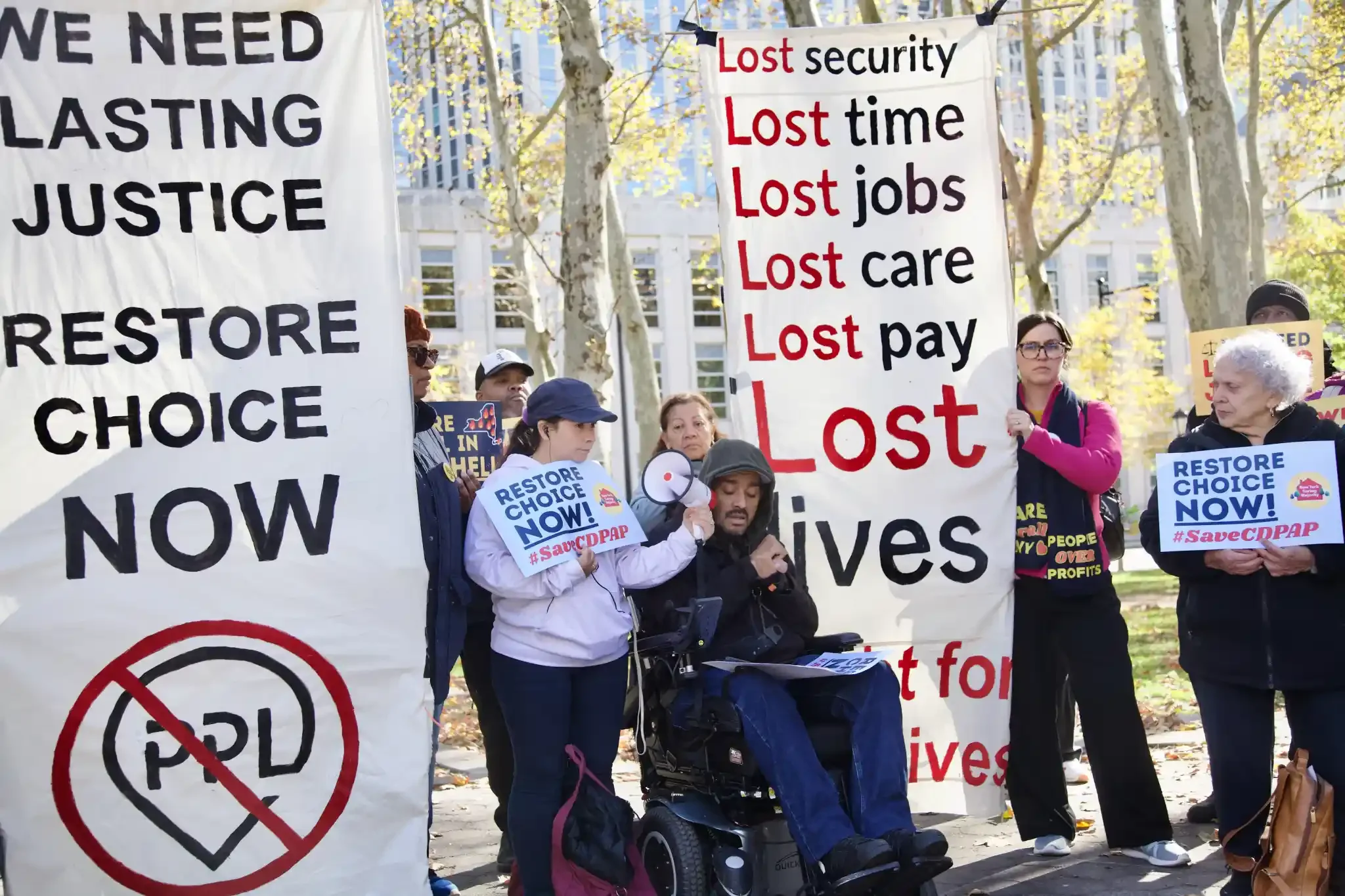
A Caring Majority advocate rallied outside EDNY. Photo by Max Parrott.
Read the full article at AMNY
By Max Parrott
Posted on November 10, 2026
A federal judge finalized a historic $162 million class action settlement on Tuesday for lost wages that Public Partnerships (PPL), the company that operates New York’s home care program, has agreed to pay a group of approximately 200,000 downstate home care workers.
After both sides reached a preliminary agreement in July, Eastern District of New York Magistrate Judge Lara K. Eshkenazi ruled that “the reaction from the class [of home care workers] has been overwhelmingly positive” and approved the final nine-figure agreement.
“This is a good day for us and a good day for aide workers in New York,” said Farshad Pinchasi, one of the named plaintiffs.
In the original lawsuit, Calderon v. Public Partnerships LLC, four home care workers alleged that PPL violated state and federal law in failing to pay them accurately and on time, and running afoul of the New York Home Care Worker Wage Parity Act in the benefits they provided workers. PPL did not immediately respond to a request for comment.
“Every home care company that does business in New York should be on notice: pay your workers accurately and on time,” said Hugh Baran, partner at Katz Banks Kumin. “We are proud of our clients, who bravely came forward on behalf of their colleagues, and we are pleased that New York’s Home Care Worker Wage Parity Act has brought CDPAP workers this landmark settlement.”
In a statement, a PPL spokesperson told amNewYork Law: “We are pleased the court has granted final approval in the settlement of Calderon v. Public Partnerships LLC following the court’s final approval of the settlement. PPL continues to categorically deny the allegations in this lawsuit, and our decision to settle was in no way an admission of fault or liability. Rather, it was a practical decision to avoid the expense, disruption, and uncertainty of continued litigation. With this matter now behind us, we remain focused on supporting the hundreds of thousands of New Yorkers who rely on CDPAP to receive care in their homes and communities.”
A group of home care workers and the older adults and people with disabilities who rely on them — many of whom claim that the wage issues that led to this settlement continue to be an issue — came to witness the finalization of the settlement. There are currently two other class action lawsuits against PPL for wage-related issues.
Home aides rally in Brooklyn ahead of settlement hearing
Advocates from the Caring Majority and affected home aides held a rally before the hearing to emphasize that the settlement does not resolve continuous systemic issues in New York’s Consumer Directed Personal Assistance Program (CDPAP).
New York’s CDPAP, which has been in operation for over 30 years, allows disabled people to get Medicaid-funded home health care from relatives or selected caregivers. In 2024, New York decided that it would consolidate the hundreds of administrative organizations that employ these aides under the auspices of PPL as the one employer for the roughly 300,000 aides across the state.
Home care aides reported that the massive transition was rough on them. The plaintiffs in the lawsuit describe “a dizzying array of technical problems preventing [the workers] timely and complete payment.”
The problems allegedly include PPL failure to pay overtime, delayed or incorrect payments, and the failure to fix its timekeeping portal. The workers also claimed that PPL had violated a state law — the Home Care Worker Wage Parity Act — that established a supplemental benefit rate for home health aides.
Some of the home aides associated with the Caring Majority said that they had it better before the consolidation of the CDPAP program under PPL. One aide, John Lupo, said that he has not been able to get PPL to address several missing paychecks despite repeated efforts.
“The bigger issue is that we should have choice and not be forced to work with companies we don’t trust who are clearly out for their own profit and making a lot of money off of the backs of the lowest-paid workers,” said Maggie Ornstein, a home aide and long-term care researcher.
The total $162 million settlement amount will go to the entire class of home aides without any action on their part — $157.5 million in a monetary payment and $4.5 million in a reserve fund. It also provides non-monetary relief in the form of the end of a health plan that the plaintiff-side attorney values at about $480 million.
The finalized settlement came after attorneys were able to block a mandatory arbitration agreement that PPL had begun asking its employees to accept for future wage claims as soon as it agreed to the settlement.
The arbitration language would have required employees to seek future wage claims against the healthcare provider individually and confidentially in arbitration. The court agreed with the motion to block it as the settlement was hashed out, but now that it is final, barring any appeals, PPL can send out the arbitration request, which its employees may choose to opt out of.
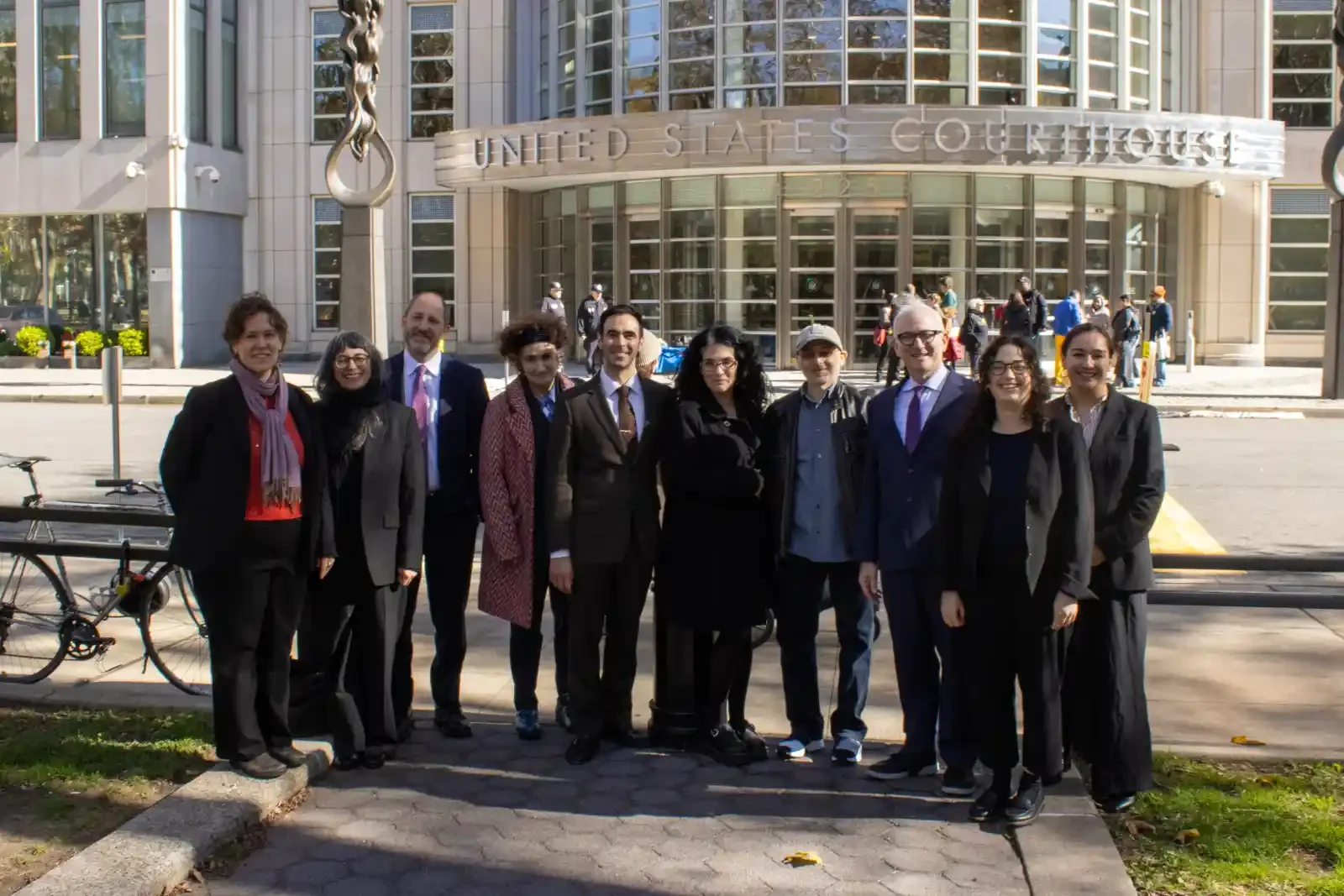
The legal teams of Katz Banks Kumin and the Legal Aid Society pose with the four plaintiffs in Calderon v. Public Partnerships.