
Crain's: Home care workers filed new wage theft lawsuits against PPL before controversial arbitration program began
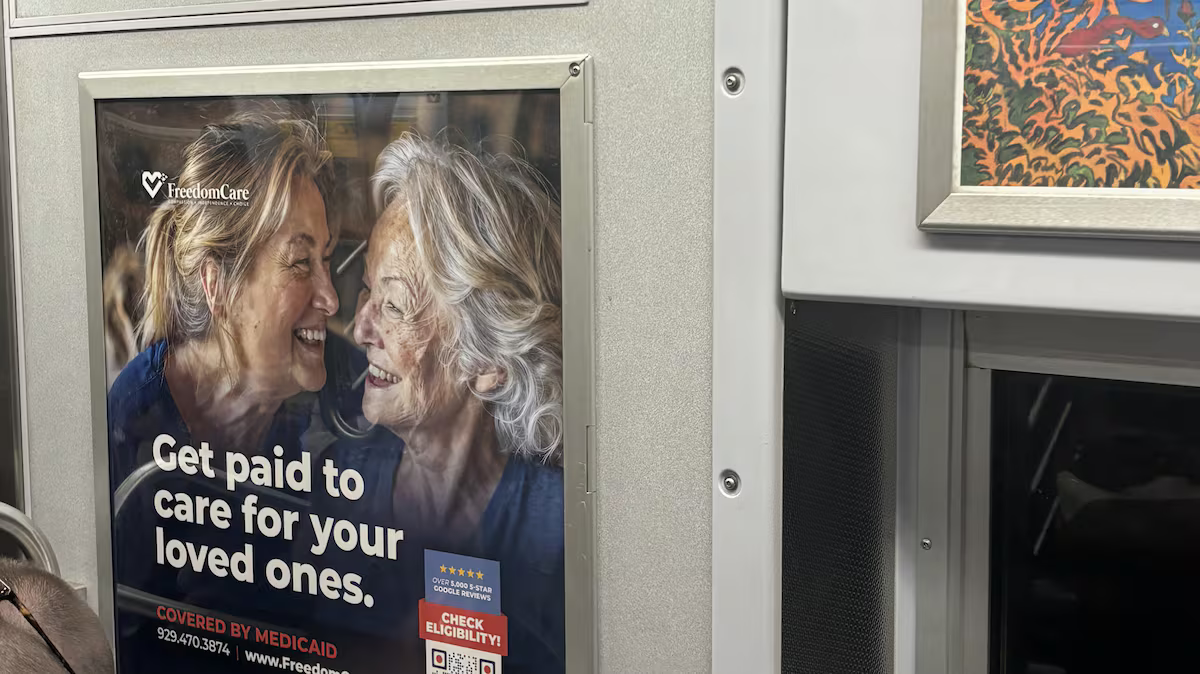
An ad for the Consumer Directed Personal Assistance Program (Bloomberg News)
Read full article in Crain’s New York Business
November 24, 2026, 05:30 AM EST
Lawyers for home health aides in the state’s consumer-directed home care program filed two class action lawsuits this month accusing the program’s administrator of wage theft. Days later, the administrator, Public Partnerships LLC, began rolling out an arbitration program that could make such suits harder to bring.
The timing of the cases could preempt PPL’s push to resolve wage claims outside court in those disputes, but lawyers say the opt-out arbitration process may make it harder for workers to band together, or to find counsel at all, going forward.
The new lawsuits, filed in state and federal court, accuse Public Partnerships LLC of failing to pay employees for the hours they worked and flouting minimum wage and overtime laws. The cases could encompass hundreds of thousands of workers in the Consumer Directed Personal Assistance Program, according to Justin Swartz, one of the lawyers on the case and a partner at Outten & Golden, which is also leading a federal wage theft suit against the company that was filed last year.
One of the suits accuses PPL of capping workers’ pay at 13 hours “as a matter of policy,” even if they work beyond that during a 24-hour shift. The suit also alleges “near-constant malfunctions” with the program’s digital timesheet app, Time4Care, that prevented workers from accurately recording their hours.
The Consumer Directed Personal Assistance Program is an $11 billion Medicaid program that lets participants hire and manage their own personal assistants, who number approximately 200,000 across the state. The state tapped PPL to administer the program as part of a contentious overhaul led by Gov. Kathy Hochul, who said the move would help rein in waste and fraud.
Since being selected to administer the program in 2025, the company has been accused of overseeing a rocky takeover and stealing wages, including in another class action on behalf of workers in Nassau, Suffolk, and Westchester counties, filed in federal court in the Eastern District in October.
The latest lawsuits were filed earlier this month in the days after a Brooklyn federal judge approved a separate $162 million settlement between home care workers and PPL in a similar wage theft case. PPL did not admit wrongdoing as part of the settlement.
The settlement’s conclusion allowed PPL to institute its arbitration program in recent weeks, which establishes a process for addressing wage complaints outside of litigation. If a caregiver disagrees with PPL’s determination, the agreement — which takes effect automatically unless the worker affirmatively opts out within thirty days — provides for arbitration by a third party rather than going through the courts, according to Meg Fitzgerald, a spokeswoman hired by the company.
“PPL is committed to ensuring that personal assistants have a fair, transparent, and efficient process for resolving any issues that may arise,” Fitzgerald said in an email. “As such, we have implemented a Dispute Resolution Agreement (DRA) designed to provide caregivers with a clearer, more direct path to addressing concerns without the time and expense of litigation.”
Fitzgerald declined to comment on the ongoing litigation.
1199SEIU, the state’s largest health care union, which is seeking to unionize the program’s caregiver workforce, has remained neutral on the arbitration program, telling workers in a recent email that the union “cannot tell you which answer is right for you,” New York Focus reported on Monday.
Union spokeswoman Rose Ryan told Crain’s the union would “immediately confront” issues related to wages, benefits and health aides’ rights if the unionization effort succeeds.
“These payment disputes and other concerns involving PPL are serious matters requiring significant worker input,” she said in a statement. “This is exactly the kind of issue New York caregivers can address through collective bargaining with a union.”
Swartz said he believes the arbitration program will not prevent the firm’s lawsuits from moving forward, but it could hamper workers’ and their lawyers’ ability to build cases in the future and may prevent some caregivers from pursuing claims at all.
“When we’re suing a big company like PPL, they have all the access to all of the information,” he said. “We can get information through the discovery process, and we can take depositions, and we can get documents and data. But it’s also very important for us to be able to talk to as many workers as we can.”
The state Department of Health, which oversees the program and awarded PPL the contract, declined to comment on the lawsuits or the arbitration program and referred inquiries to PPL.
Under the arbitration agreement, PPL pays for the cost of the arbitrator, but it is not required to pay workers’ attorneys’ fees unless the worker prevails and the arbitrator forces the company to cover their litigation costs. That is likely to stop most workers from ever hiring a lawyer, even if they believe they have a case, said Swartz.
“Even if somebody is owed $20,000, it’s not a small amount to them, but it’s tough to find a lawyer to represent you in an arbitration for a claim that small,” he said. “That’s why companies put in force arbitration, because it doesn’t technically prevent somebody from enforcing their rights, but it practically does.”