
syracuse.com: NY revamped home care for 200,000 patients. Now their caregivers risk losing certification
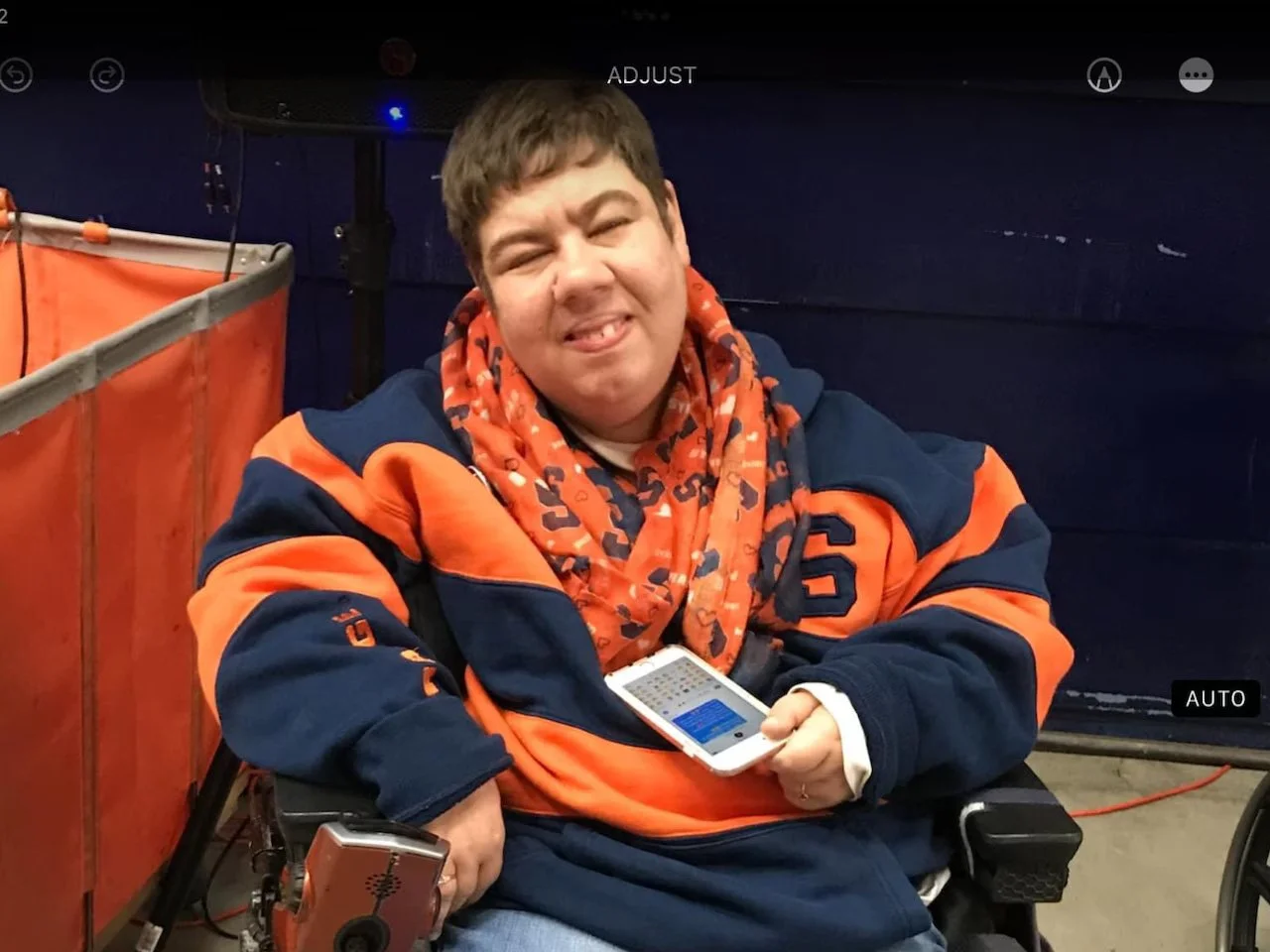
Kelly Thomas, 46, of Baldwinsville, relies on a rotating staff of personal assistants to help live independently with cerebral palsy. She is pictured here in recent years at a Syracuse football game at the Dome.Provided photo
Read article on syracuse.com
By Douglass Dowty | ddowty@syracuse.com
Syracuse, N.Y. -- Thousands of home care workers statewide have an Oct. 1 deadline to be recertified, but many are scrambling to complete a required physical exam in time, families and advocates say.
That threatens to upend care for as many as 200,000 New Yorkers, who rely on the home aides for meals, bathing and other everyday life needs. Without recertification, these workers won’t get paid through Medicaid.
In the past, these home care workers would get recertified annually as their individual deadlines came up.
This year, this army of workers -- as many as 500,000 -- all must get their doctor’s checkup by the end of the month. And if they want to avoid paying for the trip to the doctor, they have to find a WellNow Urgent Care with available appointments.
“People are struggling to make appointments,” said Jan Lynch, executive director of the Finger Lakes Independence Center, in Ithaca. “Consumers are concerned they won’t have their personal aides to help them Oct. 1 if they can’t figure this out.”
Lynch guessed that 20% of consumers seeking help from her state-funded advocacy group are having problems getting their assistants appointments.
Across vast swaths of Upstate New York, the best chance for the home care workers is at a WellNow. But some local WellNow clinics have run out of appointments before the deadline, Lynch told syracuse.com | The Post-Standard.
“They’re directed to offices 40 minutes or an hour away,” she said.
The bottleneck is the latest problem in the state’s effort to bring this entire home care network under one umbrella, a move made this year that drew criticism from people who depend on and caregivers who provide the services.
The Consumer Directed Personal Assistance Program, or CDPAP, is a popular program for people with health conditions that require assistance at home. People can hire their friends, relatives or other unskilled employees to provide care. Medicaid, the government’s health care program for the poor and disabled, pays the bill. It’s a cheaper, more personalized alternative to licensed professional health aides or nursing home care.
In the past, it ran under the oversight of more than 600 administrators spread throughout the state. This year, the state awarded all that work to a single for-profit, PPL First, much to the criticism of many.
As part of the transition, the state set the Oct. 1 screening deadline -- but left it up to PPL to work out the details.
That rush is causing worry for people like Baldwinsville resident Kelly Thomas, 46, who depends on personal assistants so she can live independently with cerebral palsy.
Her mom, Nancy Thomas, is keeping track of the difficulty her daughter’s PAs are having in getting an appointment. She alerted her daughter’s assistants of the requirement in early August, she said.
Now one is driving to Geneva to get hers done Sept. 24. Another got a date in Camillus -- but not until Oct. 3, two days after the deadline. Two others snagged WellNow appointments in Fulton and Liverpool.
Thomas called PPL, reaching a man who identified himself as ”Mark from Ohio," who suggested that PAs simply drive to Rochester to get their appointment in time.
That’s not an option for Kelly’s workers, who earn low wages and often have full-time jobs elsewhere to support themselves, her mom said.
“You just want to tear your hair out,” Nancy Thomas said.
The state health department blamed some of the prior administrators “who had an interest in trying to disrupt the transition” for failing to keep PAs up-to-date on screenings. The state ordered everyone get a new screening by the October deadline.
That screening deadline was supposed to be six months after PPL took over.
But then a judge delayed that takeover from April 1 to Aug. 1. Yet the state never adjusted the screening deadline. For those who transitioned later in the process, that shrunk the window from six months to two months to complete the medical appointment.
A health department spokeswoman directed all questions about the medical screenings process to PPL.
PPL said that personal assistants have known for up to six months about the requirement, but some have been slow to sign up.
Still, given the rush before the Oct. 1 deadline, the company said it is committed to opening up more appointments as necessary.
The company “remain(s) eager to help anyone who needs assistance,” said PPL vice president of government relations Patty Byrnes in a statement. “This critical health and safety requirement of CDPAP was inconsistently enforced across the more than 600 fiscal intermediaries operating in the program previously.”
Assistants who still need to sign up should call PPL’s subcontractor, Mobile Health, at 646-680-0450.
Mobile Health also said in a statement that it had plenty of capacity, saying that only 30% of available appointments had been claimed.
It also pointed to 10 popup clinics, though the one in Albany is the only one across Upstate. PPL says there are 240-plus other locations with appointments.
State officials say the move to PPL, a for-profit company, was made to rein in wasteful Medicaid spending and eventually save taxpayers money.
The screenings themselves are not especially complicated: it requires routine bloodwork, proof of vaccinations and physical exam to confirm someone is able to provide care.
There are three ways to complete the assessment. A PPL subcontractor, Mobile Health, is holding a series of popup sites. But the only one Upstate is located in Albany, according to Mobile Health’s website.
A PA can also get examined by their primary care physician. But PPL will not cover the cost of the visit, nor are there any guarantees someone could make an appointment in time. That could cost hundreds of dollars for someone working a low-wage part-time job.
The third option includes a visit to a health facility for lab work. In Upstate, that option typically means finding a WellNow location that has openings, advocates say.
Lynch’s Finger Lakes group, like dozens of others across the state, signed a contract with PPL First to help people navigate the transition. That contract includes a provision that precludes these groups from speaking badly of PPL, she and others have said.
Lynch said that puts her group in a tough position.
“Independent livings centers are supposed to advocate,” she said. “They’re calling us partners, but we can’t fix anything.”
PPL told its partners last week that they were working to open up more WellNow appointments for PAs. But Lynch is dubious it will be enough. She joined others in calling for the state to extend the deadline for PAs to complete their medical screenings.
Another group that advocates for home-care workers said that this is yet more proof that the state’s transition to a single administrator was misguided.
“Nobody is arguing that we go back to where we were,” said Julia Solow, lead state organizer for Caring Majority Rising. “But clearly a private-equity monopoly is not working.”