
AMNY: Medicaid-funded home health workers reach $162 million wage theft settlement against New York program administrator
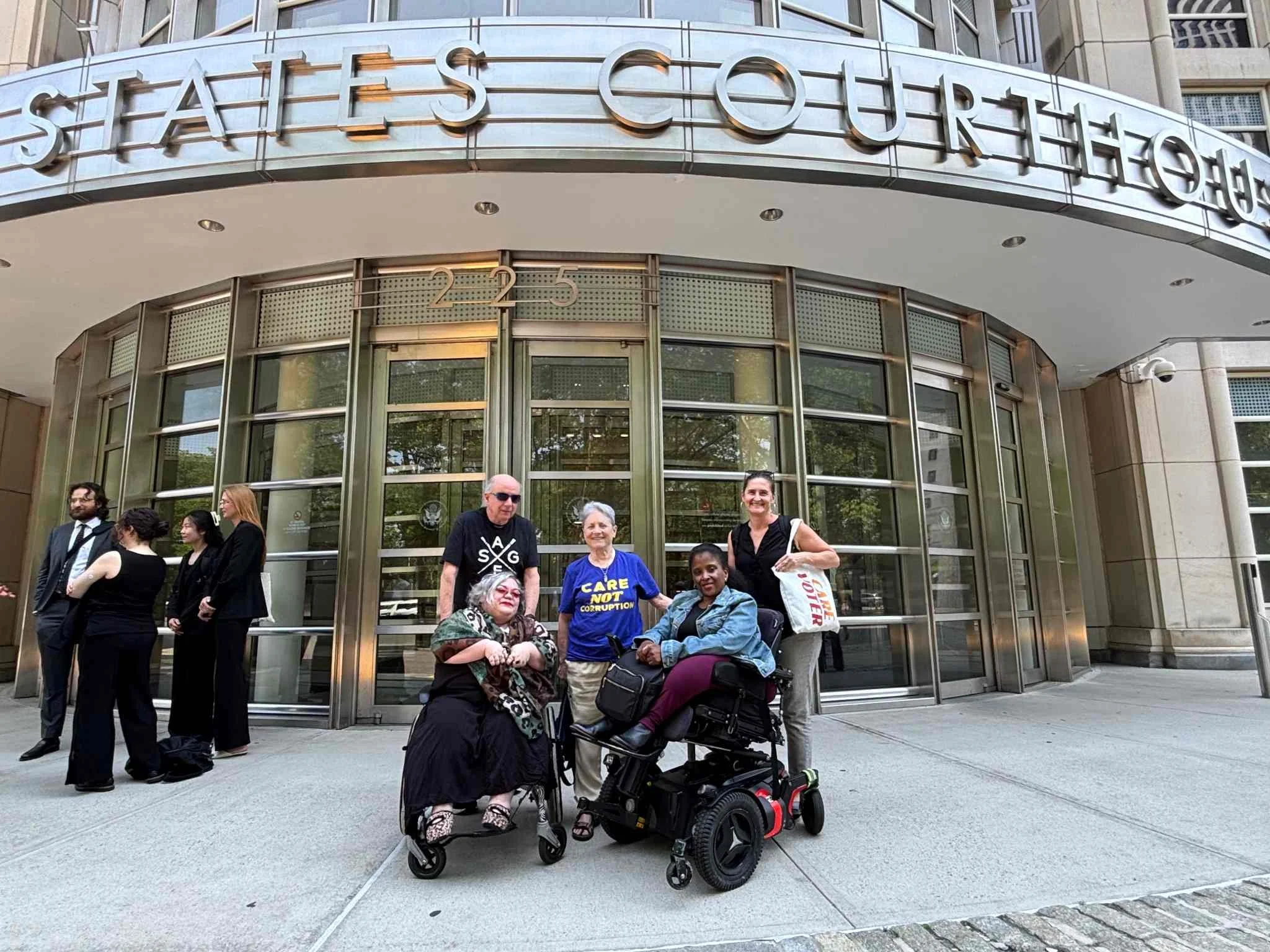
NY Caring Majority advocates celebrate wage theft settlement for home health aides.
Photo by Max Parrott
Read full article on AMNY
By Max Parrott
Posted on July 1, 2026
Public Partnerships (PPL), the company that operates New York’s home care program, has reached an agreement to settle a $162 million class action wage theft lawsuit from over 200,000 downstate home assistants.
Eastern District of New York Magistrate Judge Lara K. Eshkenazi gave preliminary approval for the settlement to move forward in a hearing on July 1. If Senior Judge Frederic Block gives final approval, it is set to be one of the largest class action settlements over lost wages in New York history.
“The $162 million is larger than the combined recoveries of the state Department of Labor, the state Attorney General, and the Department of Consumer and Worker Protection in the last year,” said Hugh Baran of Katz Banks Kumin LLP, who represented plaintiffs along with the Legal Aid Society. “It’s a really significant amount of money, and 200,000 downstate personal assistants in New York City, Long Island, and Westchester County will receive an average of $680”
That payout comes out to about a week’s pay per home aide.
In a statement, PPL acknowledged the settlement had been reached, but maintained its innocence in the matter: “We categorically deny the allegations in this lawsuit, and the settlement reflects no admission of liability or wrongdoing.”
New York has operated a Consumer Directed Personal Assistance Program (CDPAP) for over 30 years, which allows disabled people to get Medicaid-funded home health care from relatives or selected caregivers. In 2024, New York mandated that it would consolidate the hundreds of administrative organizations that employ these aides and put PPL in charge of all 300,000 aides across the state.
In the “unprecedented” transition to bring the aides under the PPL umbrella, home care workers reported “a dizzying array of technical problems preventing their timely and complete payment” that resulted in the class action lawsuit to recoup their lost wages last May.
In many instances, PPL allegedly failed to pay overtime, delayed payments, failed to fix its timekeeping portal, and didn’t pay the correct rates. The workers also claimed that PPL had violated a state law that established a supplemental benefit rate for home health aides. PPL did not immediately respond to a request for comment.
The total $162 million settlement amount would go to the entire class of home aides without any action on their part — $157.5 million in a monetary payment and $4.5 million in a reserve fund.
The settlement will pay $40.5 million in general damages to settle all wage-and-hour claims.
The rest will cover the violations of the state Wage Parity Act requiring higher base wages and a benefits supplement for all home aides in New York City and Nassau, Suffolk and Westchester counties.
The plaintiffs argued that the benefit programs that PPL had set up to comply with the law were of little to no value for many of the home aides. The settlement will return $25 million to class members based on the lost value of a preventative care program that PPL had established and end the program. Going forward, the 40 cents per hour that PPL had dedicated to the health plan will now go to a retirement account that plaintiff’s attorneys estimated to be worth $120 million in total value per year.
The other part of the supplemental benefits PPL had established was dedicated to paid time off. But what the plaintiff’s attorneys argued is that home health aides are a class of people whose hands-on responsibilities don’t allow them to take advantage of PTO. PPL data showed that about 15% of the PTO balances had actually been used, Baran said.
“They don’t want to take the time off because, for the most part, they are caring for family members and friends, and so taking time off means taking time away from them and their care,” Baran said.
The settlement will pay $92 million in claims related to PTO.
While lawyers for both the home aides and PPL were united over the settlement, the wrinkle that emerged during the hearing concerned a separate mandatory arbitration arrangement that PPL began asking its employees to accept for future wage claims as soon as it agreed to the settlement.
The arbitration language would require employees to seek future wage claims against the healthcare provider individually and confidentially in arbitration. During the hearing, counsel for PPL indicated they hoped to seek an arbitration agreement before the settlement is set to be finalized in November.
That plan of action seemed to rankle Judge Eshkenazi, who warned the company that it would open itself up to legal problems if it did so. Attorneys for the home aides raised concerns that some care workers had already expressed confusion over whether the arbitration agreement was related to the payout.
“In these agreements…there are lots of issues that people don’t really know what they’re signing,” Eshkenazi said. “You’re opening yourself up to further litigation and confusion.”
In front of the Eastern District courthouse, Valerie Joseph, who uses a motorized wheelchair and relies on a home aide for help with her permanent disability, expressed relief that the settlement will allow her to retain her home services and hoped the process would resolve as quickly as possible.
“If I don’t have care, I can’t function during the day and at night. They’re my hands. They’re my everything. If I don’t have an aide, I can’t get here,” Joseph said.